Hybrid Solar Storage Plant (80 MW PV & 20 MWh BESS) Project Report
Project Overview
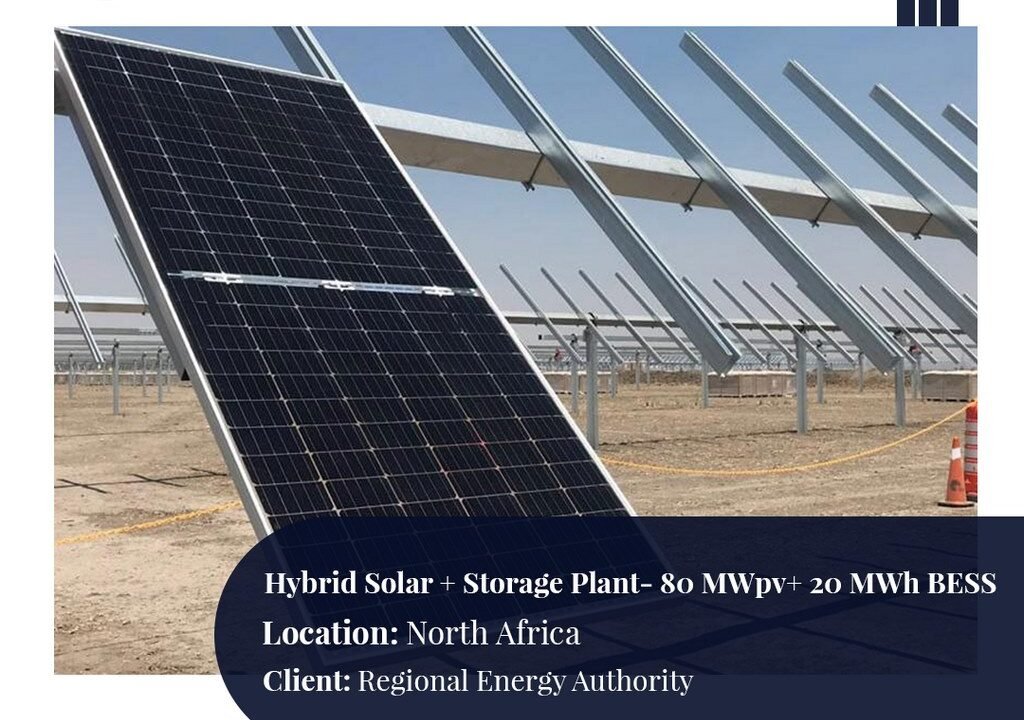
Steelbridge Export has successfully completed the technical development phase of a highly innovative Hybrid Solar Storage Plant located in North Africa. This project integrates a 80 MW photovoltaic (PV) system with a 20 MWh battery energy storage system (BESS), designed to provide high reliability for both day-time and peak-hour energy demands. Steelbridge Export has provided end-to-end EPCF (Engineering, Procurement, Construction, and Financing) consultancy and system integration for this project.
Project Details
- Location: North Africa
- Status: Technical Development Completed – Financing in Progress
- Client: Regional Energy Authority
- Role: EPCF Consultant and System Integrator
- Key Dates:
- Contract Signing: 22 May 2025
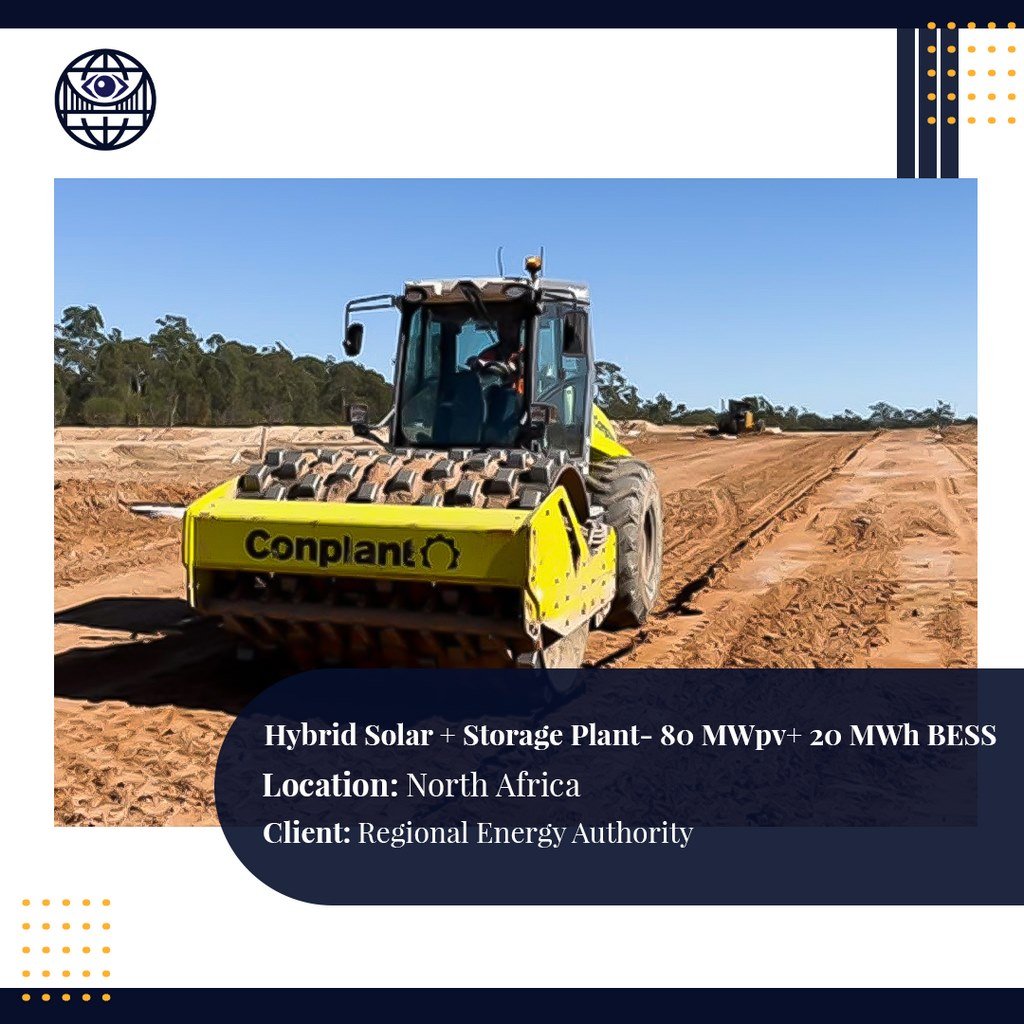
- Site Mobilization and Land Grading: To be initiated after financing closure
- Mounting Structure Installation: Planned post-grading
- Solar Panel Installation: Scheduled after mounting system
- Testing and Commissioning: Pending final project completion
Project Scope and Objectives
This hybrid system is specifically designed to address the growing demand for renewable energy, offering both energy generation (via solar panels) and energy storage (via lithium-ion batteries) to ensure continuous power supply during both day-time and peak-hour periods. The primary goals of the project are to:
- Maximize Energy Reliability: Deliver consistent electricity supply during peak consumption hours.
- Optimize Financial Viability: Ensure cost-effective energy dispatch through LCOE (Levelized Cost of Energy) optimization.
- Integrate Storage and Solar: Leverage Battery Energy Storage Systems (BESS) to store excess solar power generated during the day for use during peak load times, ensuring grid stability.
Technology and System Design
The project uses advanced technologies to achieve optimal efficiency and performance:
- 80 MW Photovoltaic System (PV):
- High-Efficiency N-Type Modules: The project will deploy the latest N-type solar modules, which offer higher efficiency rates and better durability compared to traditional P-type modules, ensuring long-term reliability and high energy yield.
- 20 MWh Battery Energy Storage System (BESS):
- Lithium-Ion Containerized Storage Solutions: These high-capacity, scalable battery solutions are designed to store the solar power generated during daylight hours, making it available during the evening and peak load periods. The BESS will help balance energy supply and demand efficiently.
- Energy Dispatch Profiles & Optimization:
- Steelbridge Export modeled energy dispatch profiles to determine the optimal timing and volume of energy release from the BESS, balancing solar generation with demand patterns to optimize performance and minimize costs.
- LCOE (Levelized Cost of Energy) Optimization:
- The project’s financial feasibility was enhanced by LCOE optimization, a strategy that ensures the most cost-effective energy production throughout the plant’s life cycle, ultimately making the project more attractive to investors.
Project Phases and Timeline
- Technical Development & Design:
- Steelbridge Export completed a detailed design of the hybrid system, including energy modeling, PV-BESS sizing, and bankable documentation preparation.
- Energy Modeling and Analysis:
- Energy dispatch profiles were carefully modeled to understand how to best distribute energy storage and solar generation. By optimizing the PV and BESS sizing, Steelbridge Export ensured that the system would meet the energy needs of the region without incurring excessive operational costs.
- Preparation of Bankable Documents:
- To facilitate financing, Steelbridge Export prepared comprehensive bankable documents outlining the technical and financial feasibility of the project. These documents were designed to attract potential investors and secure the necessary financing to move forward with the project.
- Financing in Progress:
- The project is currently in the financing phase, where Steelbridge Export is working with financial institutions and investors to secure the capital required for the full implementation of the project. Once financing is secured, the remaining construction and commissioning phases will commence.
Financial and Economic Considerations
The LCOE optimization process has been key to ensuring that the hybrid system is financially viable. By balancing the costs of solar panel installation, battery storage, and ongoing operational expenses, the project will deliver competitive energy pricing over its lifecycle, providing a cost-effective energy solution for the region.
The integration of energy storage with solar generation also offers a significant advantage in terms of grid stability and energy security, making the project a crucial part of the region’s transition to renewable energy sources.
Performance and Expected Outcomes
Upon completion, the hybrid plant will provide 80 MW of clean, renewable energy, significantly contributing to the energy grid, especially during peak load periods. The integration of battery storage ensures that any excess power generated during the day can be stored and used during high-demand hours, offering the Regional Energy Authority a more flexible and reliable power supply.
The high-efficiency N-type PV modules and lithium-ion BESS solutions are expected to deliver a high capacity factor, maximizing the overall energy output and optimizing system performance.
Future Prospects
Once the financing phase is complete and the project is commissioned, this Hybrid Solar Storage Plant will set a benchmark for future renewable energy projects in North Africa and beyond. With its scalable and sustainable approach, it will not only meet the growing energy demands of the region but also contribute to the reduction of carbon emissions, furthering global sustainability goals.
This report highlights the successful technical development of the Hybrid Solar Storage Plant, emphasizing the role of Steelbridge Export as a trusted EPCF Consultant and System Integrator. The comprehensive system design and financial structuring of the project demonstrate Steelbridge Export’s commitment to delivering innovative and sustainable energy solutions for regions transitioning to clean energy.
For more information about Steelbridge export’s Other Projects click here.
F&Q
- 1. What are the main components of the Hybrid Solar Storage Plant?
The plant integrates an 80 MW photovoltaic (PV) system using high-efficiency N-type solar modules with a 20 MWh lithium-ion battery energy storage system (BESS). This combination enables both renewable energy generation and storage to ensure reliable power supply during peak demand periods. - 2. How does the Battery Energy Storage System (BESS) enhance the plant’s performance?
The BESS stores excess solar energy generated during daylight hours and dispatches it during peak consumption periods or at night. This balances energy supply with demand, stabilizes the grid, reduces reliance on fossil fuels, and improves overall system reliability. - 3. What is LCOE optimization, and why is it important for this project?
LCOE (Levelized Cost of Energy) optimization is a financial modeling approach that balances installation, operation, and maintenance costs against energy production to minimize the average cost per unit of electricity over the plant’s lifetime. This ensures the project’s economic viability and attractiveness to investors. - 4. What is the current status and next steps for the project?
The technical development and system design phases have been completed. The project is currently in the financing stage, where Steelbridge Export is collaborating with financial institutions and investors. Construction and commissioning will commence once financing is secured. - 5. How does this project contribute to North Africa’s renewable energy goals?
By providing 80 MW of clean solar power combined with 20 MWh of storage capacity, the plant supports grid stability and peak demand management. This project helps reduce carbon emissions, increase renewable energy penetration, and aligns with regional sustainability and energy security targets.